ENERGY AND POWER ELECTRONICS

  1. Home
  2. Industries
  3. Energy and Power Electronics

Reliably connecting power

When power needs to be reliably connected

Power electronics places special demands on the manufacturing of electronic assemblies. High currents, thermally challenging layouts, large copper areas, and bulky components require stable processes, experience, and a deep understanding of reliable solder joints.

SE-TEC manufactures electronic assemblies for applications in power supply, power electronics, drive technology, control technology, and industrial systems. The company focuses on process reliability, thermal resilience, and consistent, high-quality performance.

PCBs with demanding thermal requirements call for a suitable soldering process. In SMT manufacturing, we rely on vapor-phase soldering to solder assemblies with high thermal mass evenly, gently, and reliably. For THT components, we use selective soldering processes that enable precise and reproducible solder joints.

Careful process design, monitored manufacturing parameters, and practical testing methods ensure reliable results—from prototypes to mass production.

SE-TEC stands for on-time delivery, flexibility, and solution-oriented collaboration.
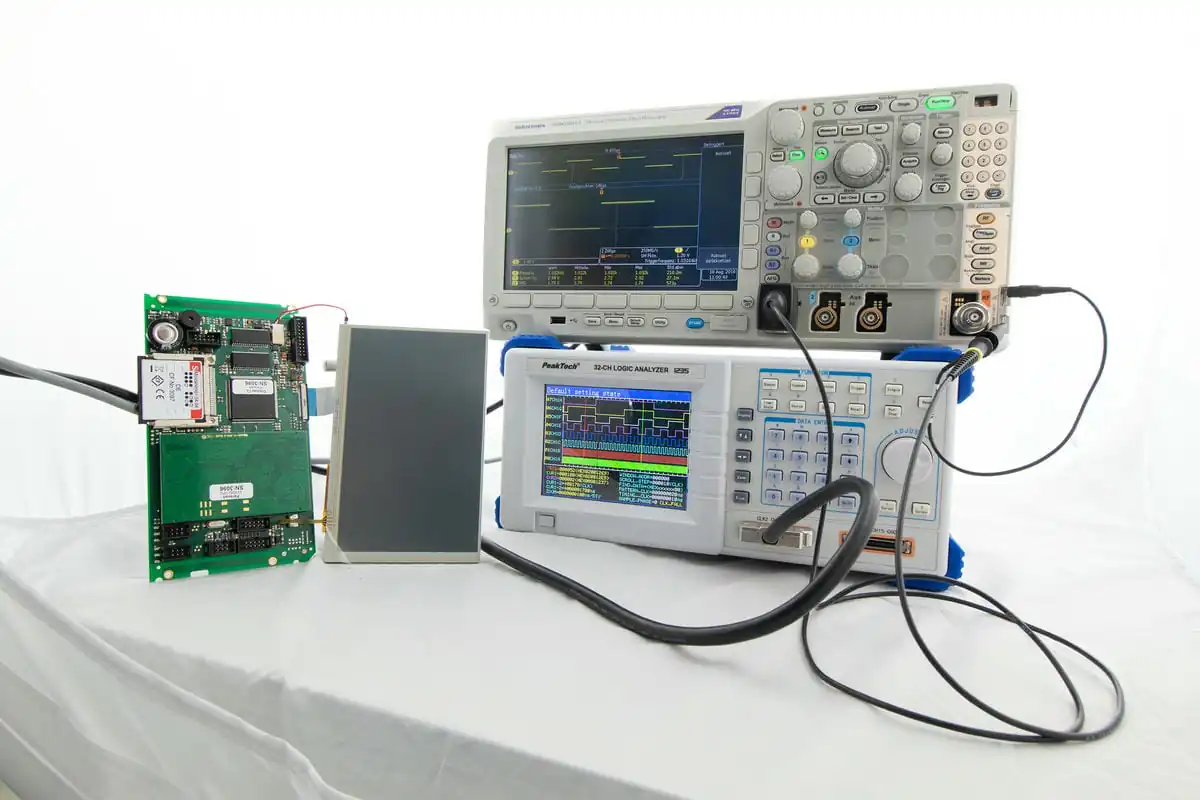
Circuit board and various electronical devices with screens

SE-TEC and power electronics — a perfect match.

Frequently Asked Questions (FAQ) on Energy and Power Electronics

What requirements does power electronics place on assembly manufacturing?

Assemblies used in energy and power electronics often involve high currents, large copper surfaces, high thermal mass, and heavy components. This results in specific requirements for process stability, heat dissipation, and the quality of solder joints.

SE-TEC tailors manufacturing parameters and soldering processes to the thermal and mechanical properties of each assembly.

What soldering processes does SE-TEC use for thermally demanding assemblies?

SE-TEC uses vapor-phase soldering for SMT assemblies with demanding thermal requirements. This process enables uniform heat transfer and is particularly suitable for printed circuit boards with high thermal mass or large copper areas.

In THT manufacturing, depending on the assembly, components, and layout, either wave soldering or selective soldering is used. The appropriate process is selected to ensure reliable and reproducible solder joints.

Why is vapor-phase soldering suitable for power electronics?

In assemblies with large copper areas or solid components, heat can be distributed unevenly during conventional soldering. This makes it difficult to form stable solder joints.

With vapor-phase soldering, heat is transferred very evenly across the entire assembly. SE-TEC uses this process to solder thermally demanding printed circuit boards gently and reliably.

For which applications does SE-TEC manufacture power electronics?

SE-TEC manufactures electronic assemblies for applications in power supply, power electronics, drive technology, control technology, and industrial systems.

The range of services extends from prototyping to reliable mass production. Process design, manufacturing parameters, and testing procedures are tailored to the specific application.

How is the quality of assemblies subjected to high thermal stress ensured?

For thermally demanding assemblies, the key lies in the interplay between PCB design, components, soldering methods, process parameters, and testing.

SE-TEC employs product-specific soldering processes, monitored manufacturing parameters, and practical testing concepts. This enables early detection of process deviations and ensures reproducible manufacturing results.