
Inspection
Automatical. Precise.
Automatic optical
inspection (AOI)
Automatic optical inspection (AOI) is a prerequisite for reliable series production. AOI reduces error rates sustainably; the one-time programming effort pays off even with smaller batch sizes thanks to significantly shorter inspection times. We rely on Omron’s VTS-730 3D inspection system to ensure the highest quality standards.
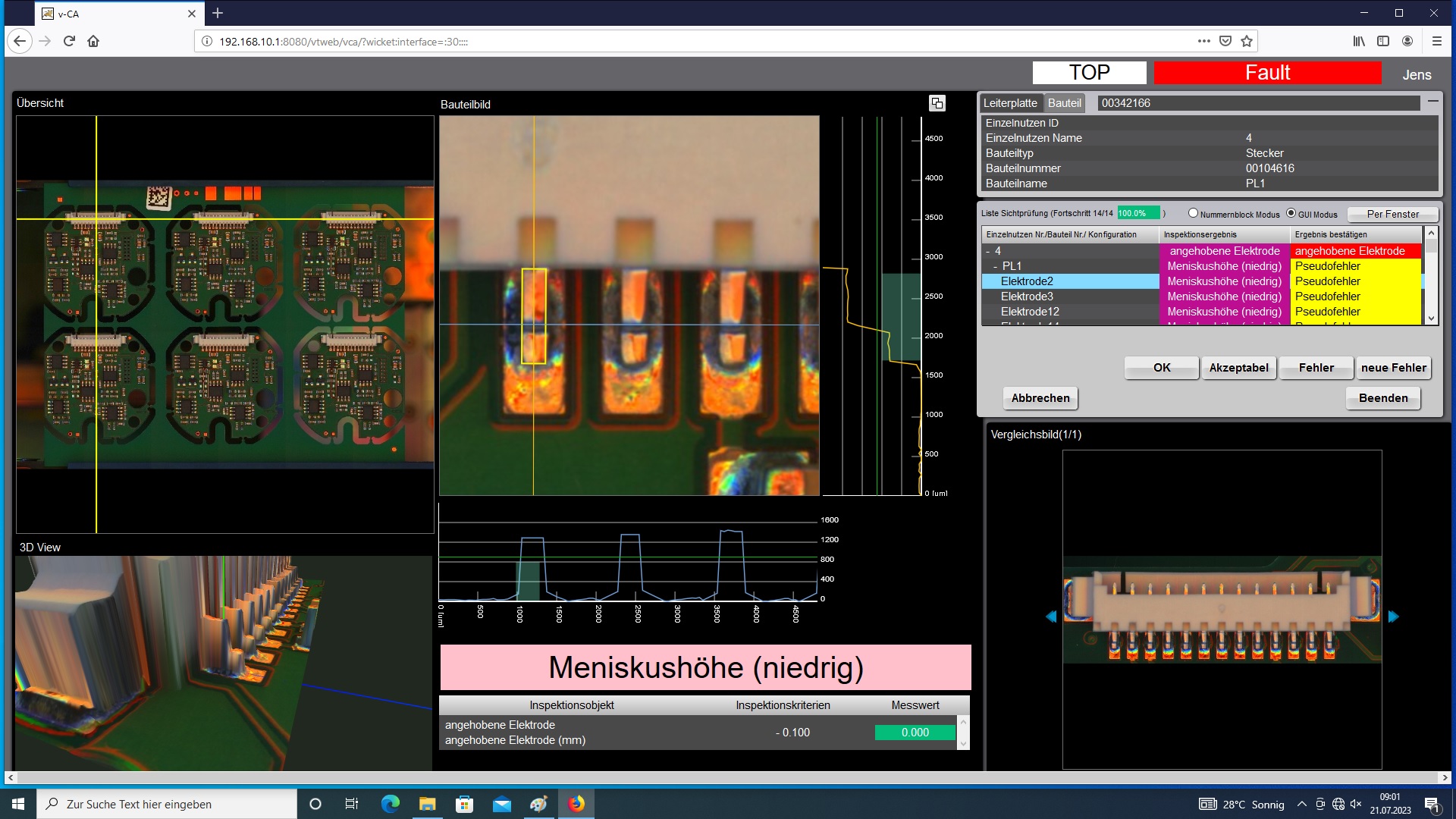
System advantages of the VTS730
- Online and offline operation for optimized throughput
- Color Highlight technology for precise color evaluation
- 3D measurement and realistic representation of solder joints and components
Tested quality features
- Presence detection
- Polarity detection
- Solder joint evaluation
- Lifted lead detection
- Short circuit check
- Optical character recognition (OCR)
- Height measurement
Experience & Detailed Inspection
Manual optical inspection MOI
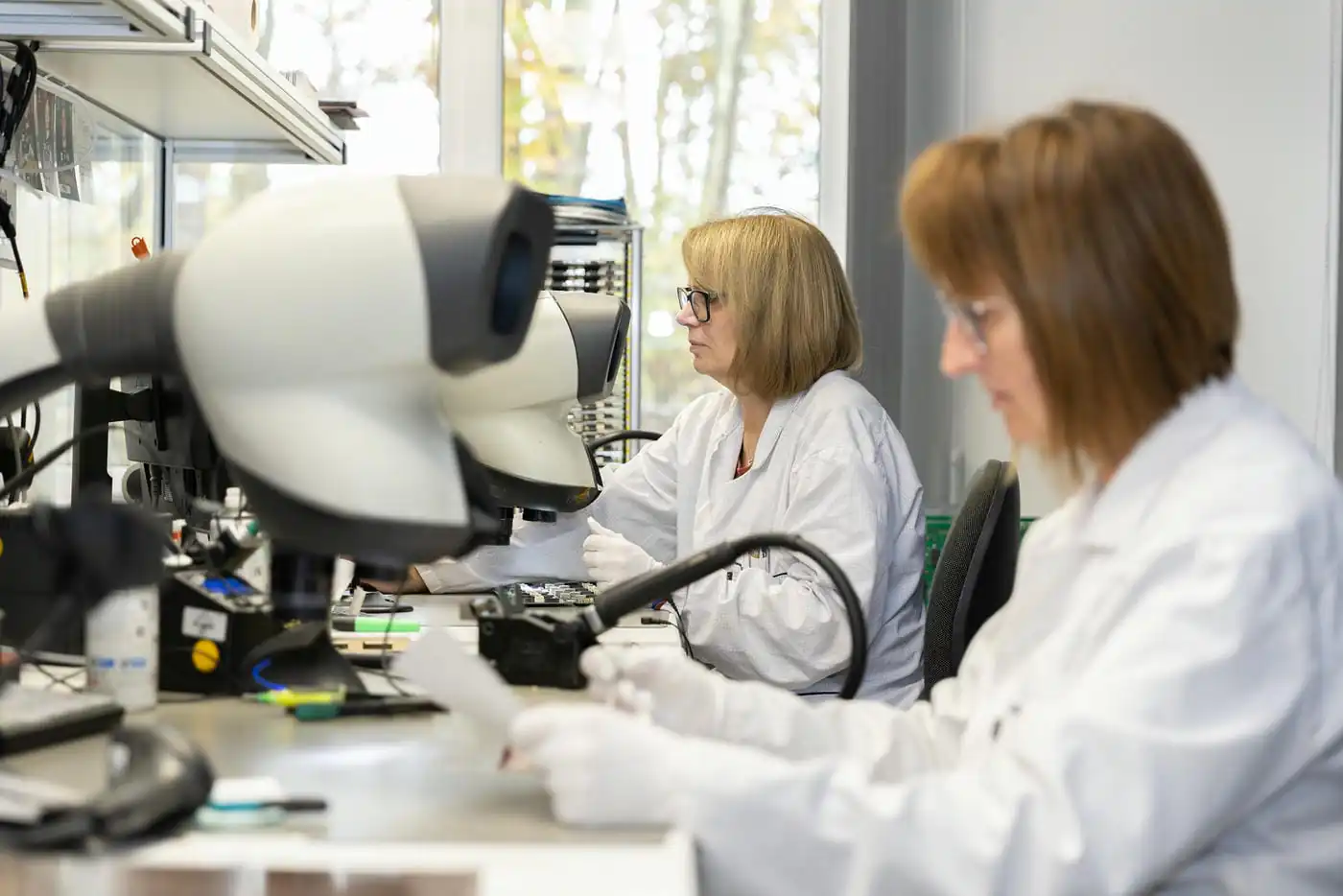
MOI with stereo microscopes for detailed inspection when visual inspection requires manual work. Our stereo microscopes feature LED lighting and interchangeable lenses with 4×, 10×, and 20× magnification, ensuring that even the smallest defects are reliably detected.
- Precise visual inspection of critical components
- Flexible magnification for different inspection tasks
- Ergonomic workstations for consistent inspection quality
Frequently Asked Questions (FAQ) About the Inspection
What is automatic optical inspection in electronics manufacturing?
Automatic optical inspection, or AOI for short, uses camera systems and image processing to inspect assembled printed circuit boards. Among other things, it checks component placement, presence, polarity, solder joints, and potential short circuits.
SE-TEC uses AOI as a key component of quality assurance in the mass production of electronic assemblies.
What are the benefits of 3D AOI?
In addition to two-dimensional image inspection, 3D AOI also enables the evaluation of height information. This allows for a more precise assessment of solder joints, component heights, and certain deviations.
This increases the depth of inspection and supports consistent, reproducible manufacturing quality.
When is manual visual inspection used?
Manual visual inspection is used when detailed checks are required or to supplement automated inspection methods. Experienced employees inspect assemblies using state-of-the-art microscope systems and specialized lighting.
This inspection is particularly important for critical components, special cases, follow-up inspections, or assemblies with specific quality requirements.
What is checked during the inspection of electronic assemblies?
Depending on the assembly, inspections include, among other things, component presence, polarity, solder joint quality, short circuits, mechanical anomalies, markings, and visual deviations.
In addition, SE-TEC pays particular attention to cleanliness and the prevention of foreign objects. To prevent FOD, potential foreign materials such as particles, shavings, wire scraps, solder balls, or packaging residues are detected and evaluated before they can impair the assembly’s function or further processing.
The inspection helps identify deviations and FOD risks early on and reliably ensure the quality of electronic assemblies.