
Testing Facility
Extended testing range
In-circuit tests & functional tests
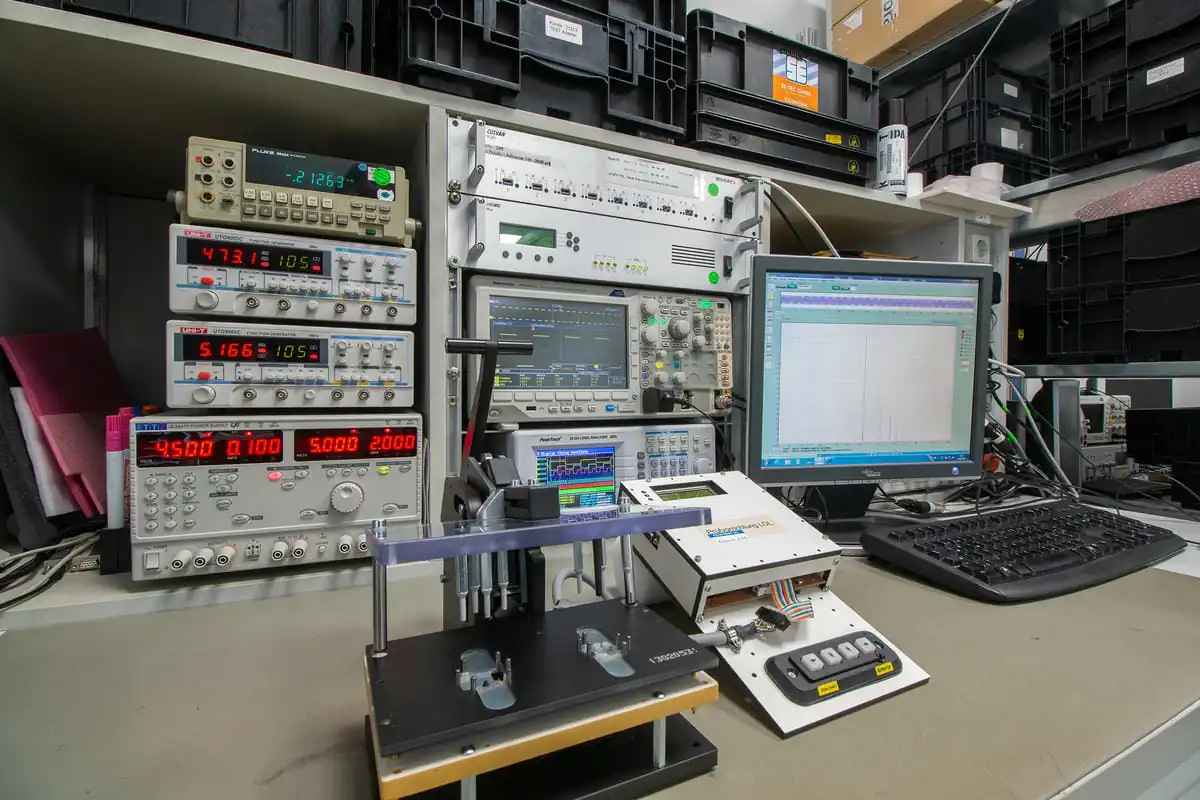
We have expanded our testing range and now use a modern testing system from Reinhardt System und Messelectronic GmbH. This enables us to perform in-circuit tests (ICT) and functional tests (FKT) on devices, assemblies, modules, and hybrids. These testing procedures ensure both the electrical integrity of individual components and the interaction of complete systems.
Combination of optical and electrical testing
The combination of 3D AOI and ICT/FKT significantly increases the depth of testing. While automatic optical inspection detects soldering and placement errors, ICT and functional testing check electrical properties and functions. The result: early error detection and significantly lower failure rates.
Advantages in series production
- Early detection of process indicators reduces rework and scrap.
- Comprehensive test coverage through optical and electrical tests increases reliability.
- Documented quality assurance creates transparency and trust.
Frequently Asked Questions (FAQ) About the Testing Facility
What is a testing facility in electronics manufacturing?
A testing facility is an area where electronic assemblies and devices are tested for electrical and functional performance. There, the assembly is tested to determine whether it meets the defined requirements and operates reliably.
SE-TEC uses the test facility for project-specific tests and functional tests using electrical testing methods.
What electrical tests does SE-TEC offer in its testing facility?
Depending on the project, SE-TEC performs in-circuit tests, functional tests, and customer-specific test procedures. This allows for the verification of individual electrical characteristics, assembly functions, or complete system functions.
The test strategy is determined based on the assembly, the production volume, and the required quality certifications.
What is the difference between ICT and a functional test?
An in-circuit test, or ICT for short, checks individual electrical connections and components within an assembly. A functional test, on the other hand, verifies whether the assembly or device operates correctly in its intended application.
Combining both methods increases the depth of testing and supports reliable mass production.
Why are electrical inspections important before shipment?
Electrical tests ensure that electronic assemblies are not only correctly assembled but also fully functional. This allows defects to be detected early, reduces the need for rework, and minimizes the risk of failure for the customer.
For demanding applications, documented testing processes are a key component of quality assurance.